
Food supply and restaurant service to reduce food waste
Service Design, Design Research
Time frame: 14 weeks
Client: Accenture
Team members: Anahita Dasgupta, Brayan Pabón, Claire Xu
Role: Service Designer
Skills: Research Analysis, Interviews, Ideation, Prototyping, Experiment, Service Blueprint
How Might We
How might we encourage citizens to participate in sustainable food activities without feeling burdened?
Summary
Challenge
Sustainable food activities need to be more accessible to people.
Many people are willing to adopt more sustainable behaviors, but they don’t know where to start. Also, they are put off by actions they believe are difficult. We focused on food sustainability and tackled the challenge of how to encourage people to act sustainably.
Solution
Restaurant service that reduces food waste.
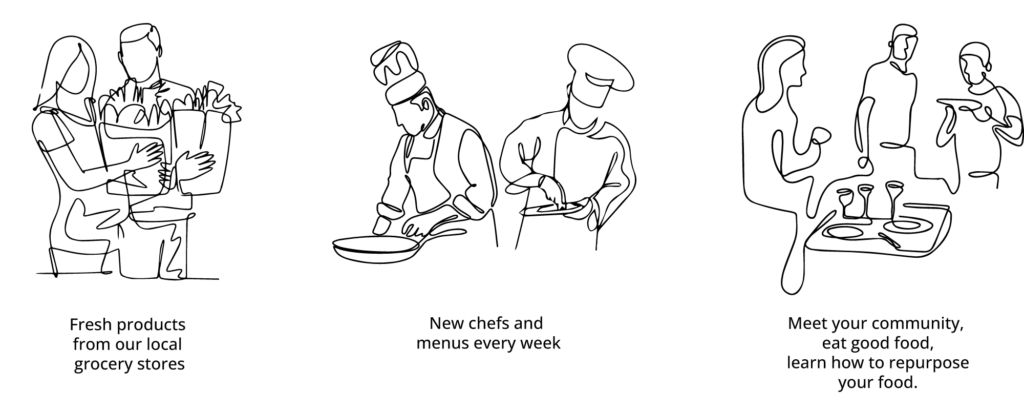
We proposed a sustainable food supply and restaurant service called Fresh Table. This service reduces food waste by purchasing unsold food from grocery stores and utilizing it as ingredients for the kitchen.
Research
Process
01. Secondary Research
We researched the current state of the sustainable food problem in the United States.
02. Stakeholder Interviews
First, we learned about the industry and challenges from sustainable service experts and service designers. Next, we interviewed the users, friends and families, about their interests and habits. Finally, we got feedback and verified the feasibility of our concept from food suppliers, local grocery stores and restaurant chefs.
03. Survey and Prototyping
After developing the concept, we surveyed and prototyped our sustainable kitchen concept and evaluated its desirability and viability.
Result
Secondary Research
How much waste?
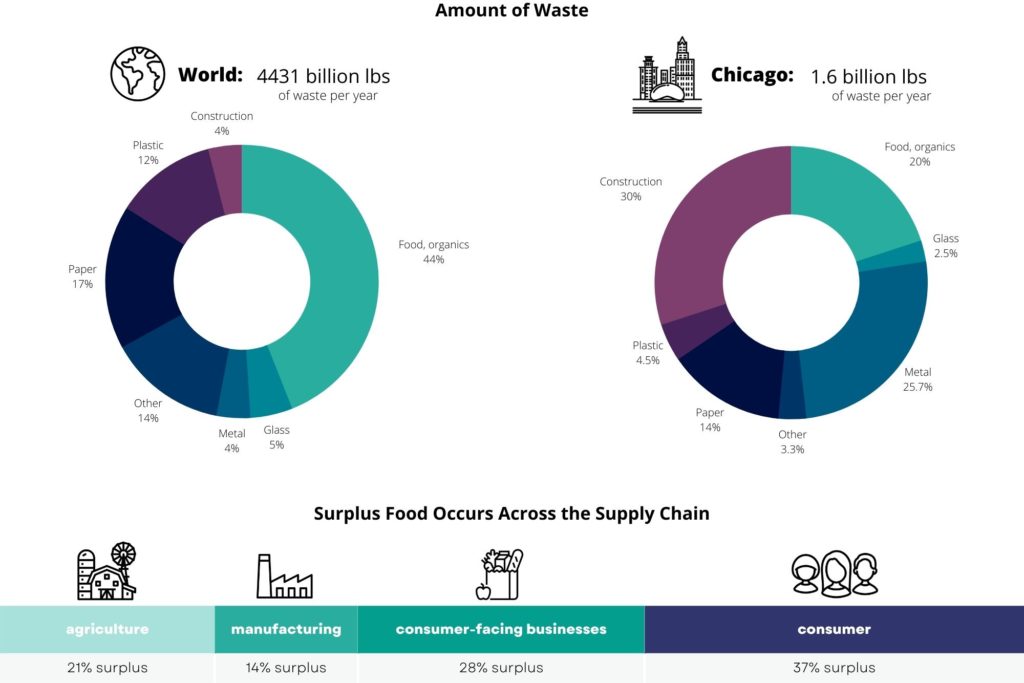
Among all the waste produced, food waste accounts for a large percentage in both the world, and a significant percentage in Chicago. In the United States, we throw away 40% of all the food we produce. As much as 30% of food in grocery stores is thrown away. Our food system remains one of the biggest contributors to climate change, generating significant amounts of solid waste and emitting greenhouse gases during the process.
Systems and Impacts Leading to Food Waste
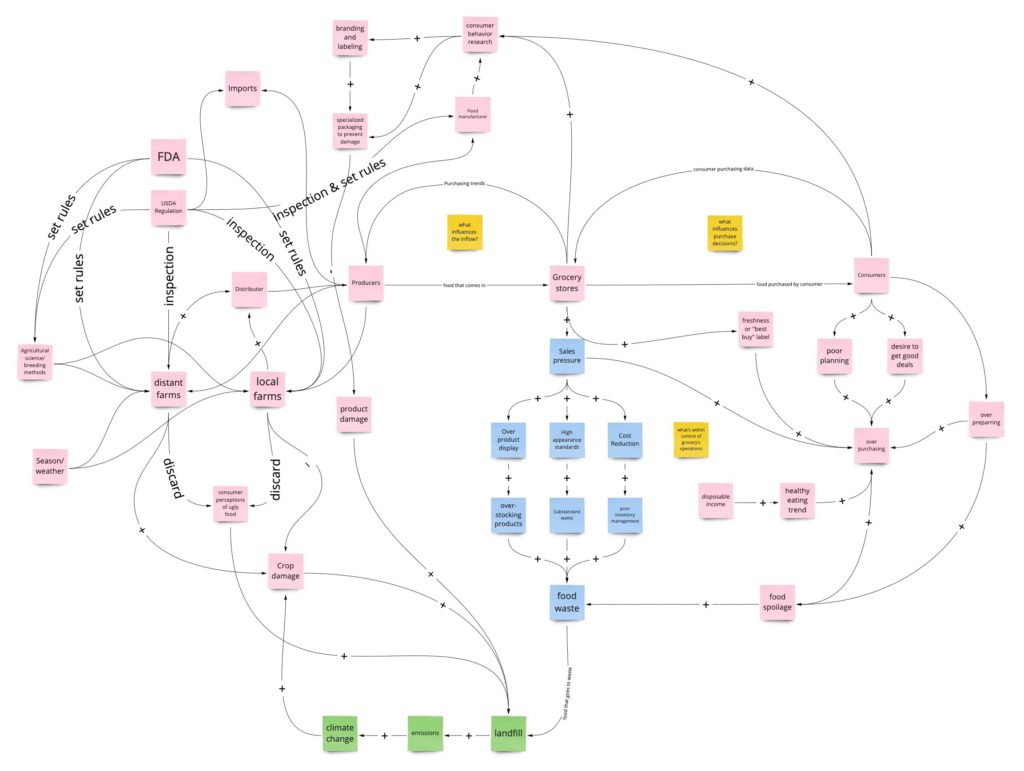
We researched the overall systems leading to food waste.
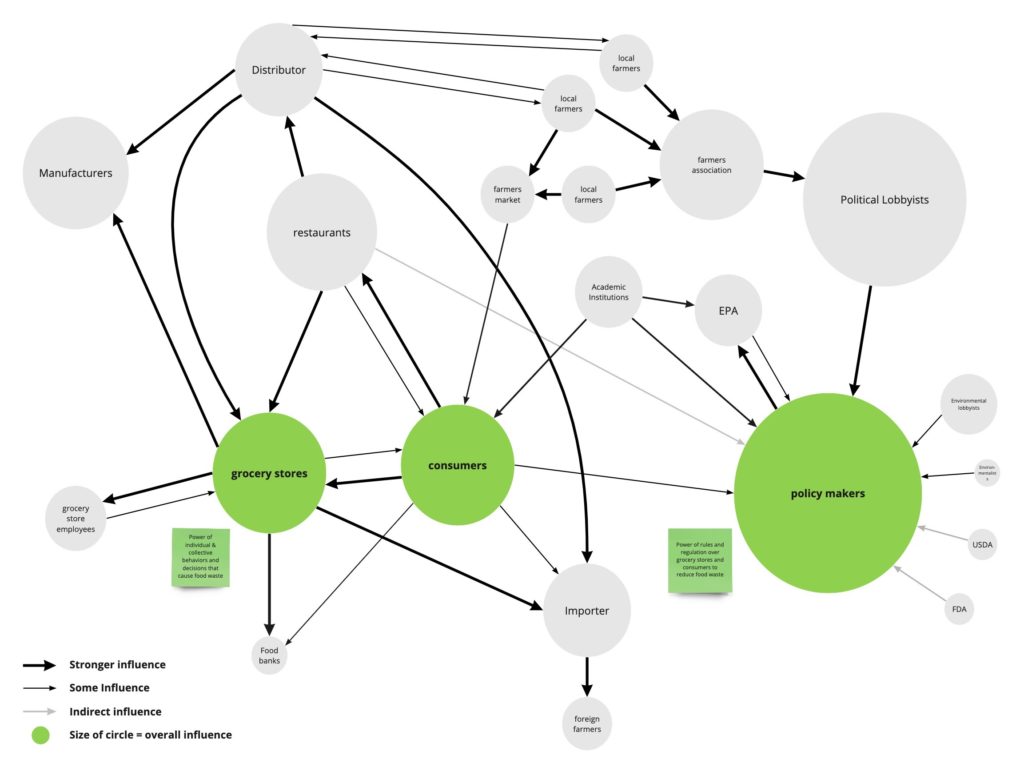
Consumers tend to buy too much food or cook more food than they can eat. These consumer mental models eventually lead to food waste at the household level. Consumers also influence grocery stores’ purchasing, sales management, and inventory control, and their demands influence food and agriculture policies through public opinion.
Government food policies significantly impact the actions of all stakeholders within the system.
The distribution of food involves the supply chain, manufacturers, and farmers. Many food items are discarded along the way before reaching the stores.
Grocery store operations also have a variety of causes that lead to food waste. Discarding imperfect-looking food, excessive displays, and over-sales contribute to the increase in food waste.
Discarded food is transported to landfills, generating greenhouse gas emissions.
Food Waste Systems Map
Food Waste Power Dynamic Map
Grocery Staff Interviews
A lot of food is thrown away every day in grocery stores
Grocery store staff told us that many slightly imperfect or damaged foods or foods close to their expiration dates are thrown away every day, and that packages are thrown away if there is even one damaged food item.
Chef Interviews
Some restaurants are interested in sustainability and the local community
Through chef interviews, we learned that chefs agree with our concept and are interested in reducing food waste. While some restaurants are pursuing high profits, others are interested in community and sustainability. We will focus on sustainability and community-minded restaurants.
User Interviews and Insights
There are many barriers to sustainability for people
We coded user interview results and clustered them with a focus on barriers to sustainable behavior. Many users were interested in sustainability. However, in reality, not many people are engaged in sustainable activities. We found that effort, time, and cost were major barriers.
Key Findings
Convenience and cost are the most dominant barriers to sustainability.
When considering food waste, people often don’t know where to begin.
People’s desire to do good for the environment doesn’t always translate into action.
Design Principles
After research and insight analysis we defined design principles for sustainable service and explored concepts.
No burden on users
We engage users in sustainable activities in an enjoyable way without feeling like a burden.
Integrate sustainable information into daily life
We aim for users to participate and learn about sustainable practices naturally through food and eating.
Create a network for sustainability
To expand our services, we will engage suppliers, customers and other stakeholders to build a network and supply chain for sustainability.
Solution
Overview
We proposed a sustainable restaurant called Fresh Table. This service reduces food waste by purchasing unsold food from grocery stores at a discount and using the items as ingredients in our kitchens.
Creating a new supply chain for unused food
Tons of food is thrown away every day in grocery stores because it is a little damaged or looks bad. We will reduce this food waste by reusing it effectively. We also engage chefs interested in sustainability to create a network of sustainable activities. In the future, we plan to expand food supply chains for many restaurants.
Providing a sustainable restaurant where people can learn while having fun
People can easily engage in sustainable activities while enjoying their meals. They can also learn about food sustainability and recipes for utilizing leftover food through events, a website and an online Instagram community. We partner with various chefs to provide our guests with a variety of menu items that change based on the ingredients we source.
Stakeholder Relationships
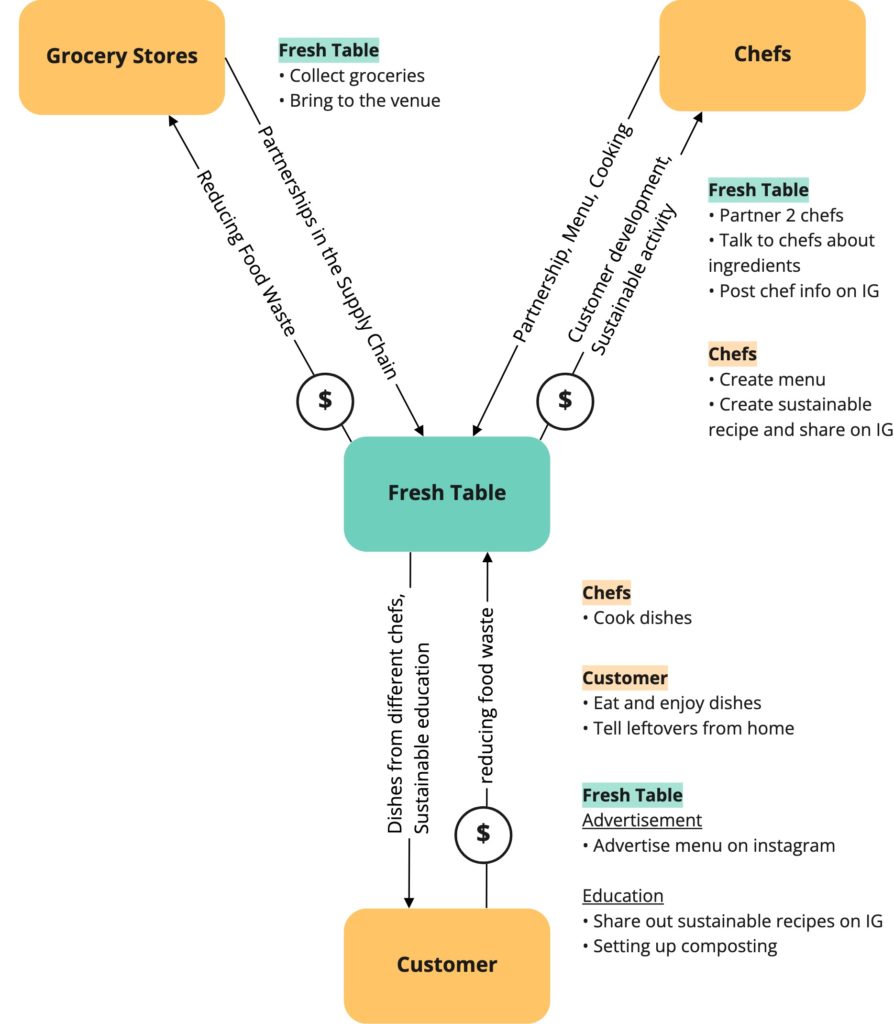
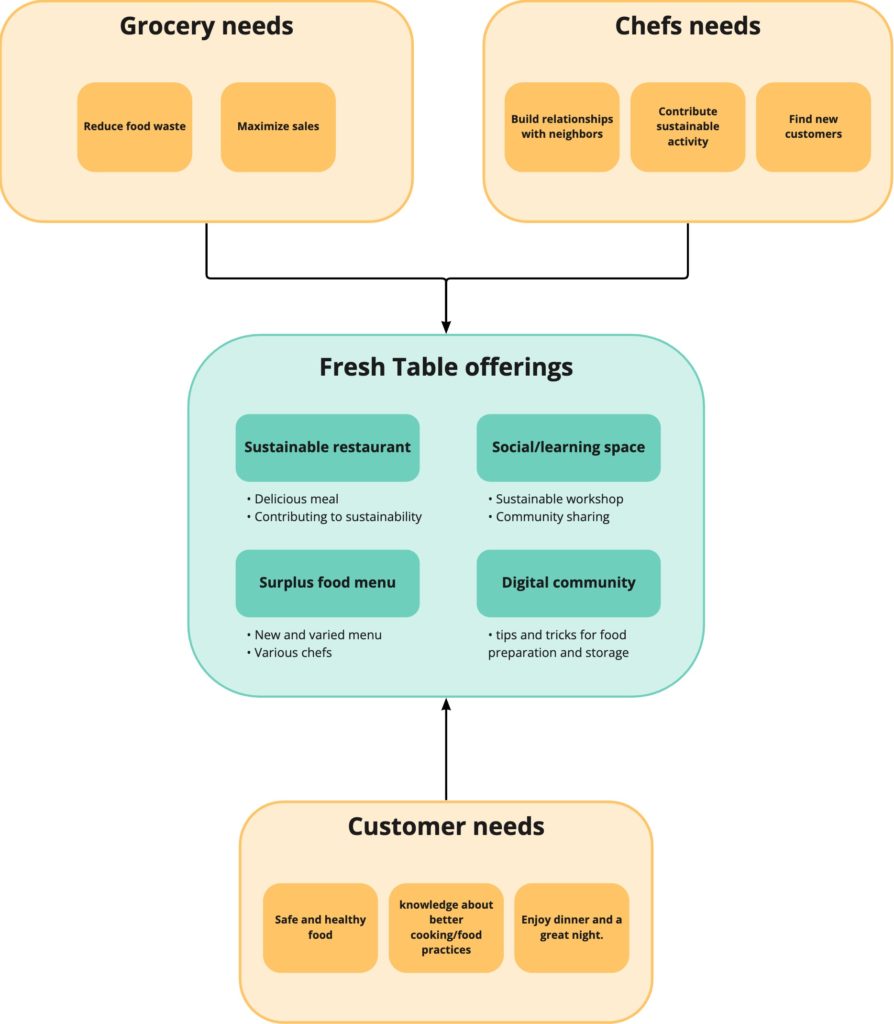
Fresh Table aims to create a sustainable network by connecting the needs of three main stakeholders: grocery stores, local chefs, and community residents.
• Grocery stores want to utilize unused food effectively and make a small profit
• Chefs want to create local relationships and gain customers
• Customers want to enjoy a good meal
• Fresh Table provides sustainable restaurants and supply chains
Value Ecosystem
Needs & Offerings
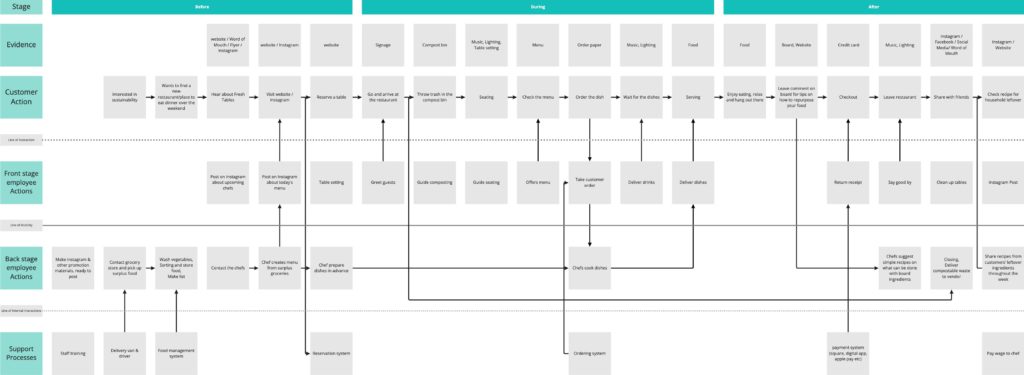
Service Blueprint
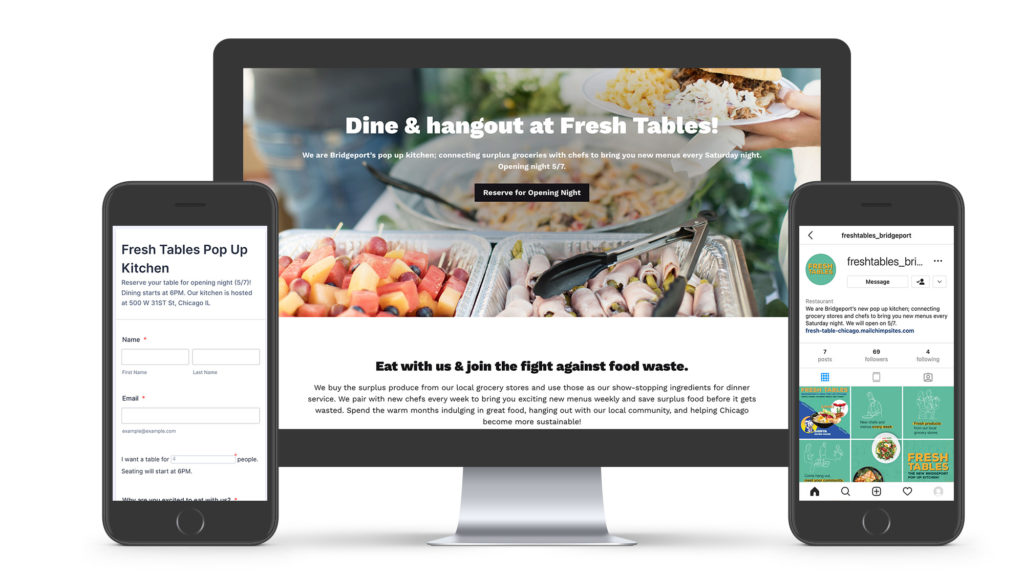
Prototyping
We prototyped the website and reservation form to research user interest. Then, we created an Instagram profile to post information. The chefs we asked to interview also shared our posts. The resulted in increased website traffic and Instagram followers, indicating that many users were interested in our services.
Next Steps
Build partnerships
Develop partnerships with grocery stores to create a stable supply chain.
Create a community
Create a sustainability community by increasing web and Instagram content, including food sustainability information and recipes.
Expand services
Expand supply chain systems and services that utilize unused food, and expand service areas.